

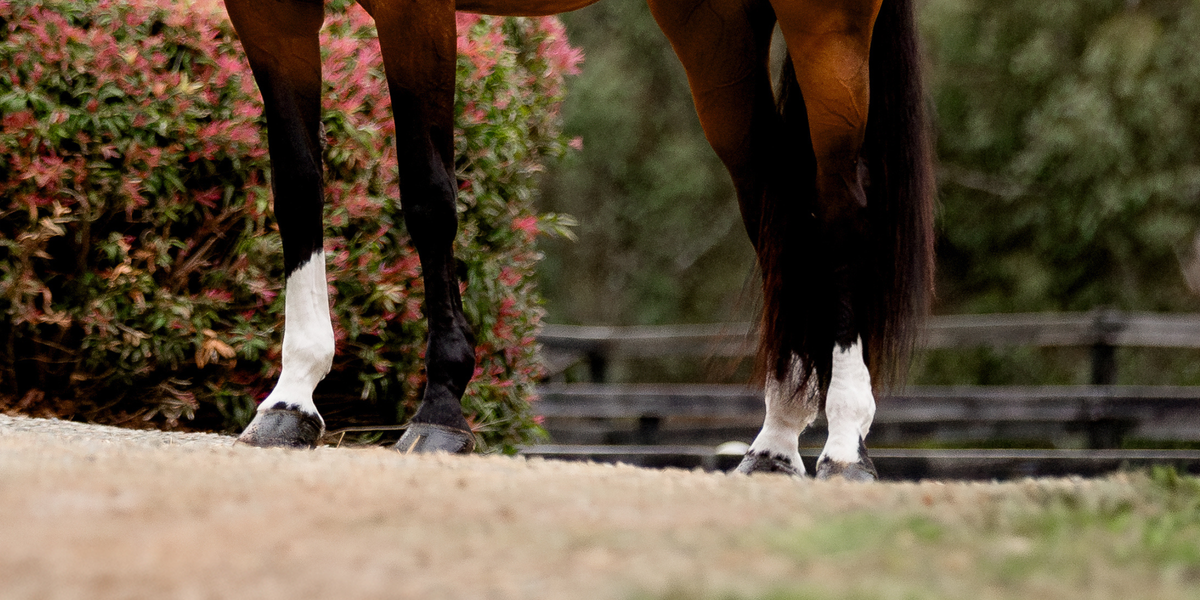
"No hoof, no horse" is one of the oldest sayings in the book, and it's still one of the truest. Every rider eventually asks the same question: should my horse go barefoot, or is it better to shoe them? The honest answer is that there's no single right choice for every horse. It depends on the terrain you ride, the workload your horse carries, their individual hoof shape, and yes, your budget too.
In this guide, we'll walk through the practical differences between barefoot and shod horses across road riding, grip on grass, posture and hoof angles, and cost, so you can make an informed decision with your farrier or vet.
What do we mean by "barefoot"?
Going barefoot doesn't mean skipping hoof care altogether. A barefoot horse still needs regular trims, usually every four to six weeks, to keep the hoof balanced and prevent overgrowth. The theory behind barefoot management is that an unshod hoof can flex naturally with each stride, which supporters believe improves circulation and encourages a stronger, more callused hoof capsule over time.
The catch is that transitioning a shod horse to barefoot isn't instant. It can take months for the sole and hoof wall to toughen up enough to cope with harder ground, and during that window, many horses are footsore or need hoof boots for anything beyond soft going.
Why some horses wear shoes
Shoes exist to solve real problems: protecting the hoof wall from wear, adding traction, correcting uneven weight distribution, or supporting a hoof that's recovering from injury or disease. A farrier can also use shoes and pads to change the angle at which the hoof meets the ground, which matters a great deal for horses with conformation issues or those coming back from lameness.
Shoeing isn't free of trade-offs, though. Nailing on a shoe restricts some of the hoof's natural flexion, and poorly fitted or overdue shoes can do more harm than good. This is why the debate rarely has a universal winner, it comes down to the individual horse in front of you.
Road riding: protection vs conditioning
If you regularly hack along sealed roads or gravel tracks, this is where the barefoot-vs-shod conversation gets most practical.
Shod horses generally cope better with road work straight away. Steel or synthetic shoes take the brunt of the wear that would otherwise grind down the hoof wall, and studs or road nails can be added for extra grip on wet tarmac.
Barefoot horses can absolutely handle road riding too, but it usually depends on hoof boots or a long conditioning period. Many barefoot riders use boots specifically for road work and turn their horse out unshod the rest of the time, giving them the best of both. Without boots or a properly toughened sole, sustained road work can leave a barefoot horse footsore, especially in the first months of transition.
If your conditioning plan involves trailering to different surfaces to build up tolerance gradually, it's worth keeping an eye on how your horse travels too. Fitting an Equine Eye Venture camera in the float lets you check they're standing comfortably and evenly on all four feet during the trip, useful information if you're trying to work out whether a change in footwear is affecting the way they travel.
Grip on grass: why wet, dewy grass catches so many barefoot horses out
This is where the theory and the paddock reality don't always line up. In principle, a barefoot hoof with a healthy, weight-bearing frog should grip well on natural footing, the sole and frog mould to the ground and give a horse more feel underfoot than a hard metal shoe. In practice, plenty of owners find their barefoot horse slipping and scrambling on short, wet or dew-covered grass, particularly first thing in the morning or after rain. It's a genuinely common complaint, and it isn't in your head.
A few things are usually behind it:
- Grass length and moisture matter more than shoe status. Short, closely grazed or freshly mown grass with a film of dew or rain on it is about as slick as footing gets, for barefoot and shod horses alike. Longer, drier grass gives far more purchase regardless of what's on the hoof.
- Hoof shape plays a bigger role than most people expect. Horses with big, flat, rounded feet (cobs and native breeds are often mentioned here) tend to have less natural grip than those with a more upright, concave hoof. A trim that removes too much heel or bar can strip away the small "anchor points" at the back of the foot that would otherwise help bite into soft turf.
- A freshly trimmed edge can be slicker for a few days. A neatly rolled or bevelled hoof edge, which many barefoot trims deliberately create to reduce chipping, can feel noticeably more slippery on wet grass until it wears in slightly.
- Shod isn't automatically better here, but it can be closer than you'd think. Some farriers and riders report that a plain, unstudded shoe actually grips comparable, or even slightly better, on wet grass than a bare hoof, simply because the edge of the shoe bites into the turf. Where shoes clearly pull ahead is with studs added, which give real, adjustable insurance on wet or undulating ground for disciplines like eventing, showjumping or hunting. The trade-off is that studs must be fitted and removed for each occasion, and a stud that's too aggressive for the going can overload a joint or tendon rather than help it.
- Hoof boots are a mixed bag on wet grass specifically. Many barefoot riders use boots with a lugged, grippy sole and find they transform confidence on slick ground. Others report the opposite, that a boot's sole can feel less secure than bare horn on short, dewy grass, even though the same boots are excellent on tarmac or gravel. It genuinely seems to vary by boot design and by horse.
If you turn your horse out unsupervised and want to know whether they're genuinely struggling on wet grass, rather than just picking their way across it a little more carefully, a paddock and stable camera is a useful way to check in without having to walk out into the dew yourself.
The honest takeaway is that "barefoot grips better on grass" is a bit of an oversimplification. Wet, dewy or freshly cut grass is a genuine slip risk for most horses, and the deciding factors are more about hoof shape, trim style and grass condition than a simple barefoot-versus-shod split. If your horse is consistently unsteady on wet grass, it's worth discussing hoof shape and trim style with your farrier before assuming shoes (or boots) are the automatic fix.
Posture, support and hoof angles
This is arguably the most important, and most individual, part of the decision. Hoof angle affects everything above it, from the fetlock to the shoulder and back. A hoof that's trimmed or shod at the wrong angle can quietly change how a horse loads its tendons and ligaments, sometimes contributing to postural compensations that show up as stiffness, uneven wear patterns, or subtle lameness.
Shoes and pads give a farrier more tools to correct a problematic angle or add support to a compromised hoof, for example wedge pads for a horse with low, underrun heels, or egg bar shoes for extra support through the heel region. This is often why horses recovering from conditions like navicular changes or laminitis are kept shod, at least temporarily, under veterinary guidance.
Barefoot advocates argue the opposite case: that a natural, unrestricted hoof develops better overall balance over time, and that many postural issues stem from years of incorrect shoeing rather than being solved by it. In truth, both camps are right some of the time. What matters most is regular, skilled trimming or shoeing and being alert to small changes in the way your horse stands, moves or shifts its weight.
Keeping an eye on your horse through a transition
Whether you're transitioning to barefoot or trying a new shoeing approach, the early weeks are when close observation matters most. Subtle signs, a horse resting a foot more than usual, shifting weight, or moving tentatively on hard ground, are much easier to catch when you can check in on your horse between visits rather than only during a ride.
This is exactly the kind of thing our customers use the Equine Eye Vision camera for. It's a portable, off-grid camera that runs on 4G, so it works in the paddock, the stable or the trailer without needing wifi or power nearby. If you've just changed your horse's hoof care routine, being able to check the live feed from your phone, day or night, means you can spot discomfort early rather than waiting for the next farrier visit. For horses that travel for events or lessons, the Equine Eye Venture camera gives you the same peace of mind on the road, so you can see how they're coping with a longer journey on their current hoof setup. You'll find our full camera range at equineeye.com.
The cost comparison
Budget is a genuine, practical factor, and it's one of the clearest differences between the two approaches.
- Barefoot trims typically cost less than a full set of shoes, generally landing somewhere in the range of $35 to $75 (or roughly £25 to £40) per visit, depending on your region and farrier.
- A full set of shoes usually costs more, often in the range of $120 to $190 (or around £70 to £120 for a full set with studs or road nails), because of the added materials and labour.
- Therapeutic or corrective shoeing, such as pads or specialised shoes for a hoof issue, can run considerably higher, sometimes $175 to $350 or more per visit.
- Most horses need attention every six to eight weeks regardless of whether they're shod or barefoot, though shod horses sometimes need a slightly shorter cycle as shoes wear or loosen.
Over a full year, this can add up to a meaningful difference between the two approaches, particularly for owners with multiple horses. That said, the cheapest option on paper isn't always the cheapest overall, a poorly managed transition to barefoot, or delayed farrier visits to save money, can lead to far costlier problems down the track.
So, which is right for your horse?
There's no universal answer, but a few honest questions can help guide the conversation with your farrier or vet:
- How much of your riding happens on roads or hard, abrasive surfaces?
- Does your horse have a hoof conformation issue, or a history of lameness that needs extra support?
- Are you willing to invest in hoof boots and a longer conditioning period if you go barefoot?
- What does your budget realistically allow for, both routine care and the unexpected?
Many riders land somewhere in between, keeping a horse barefoot at home and using boots for road work, or shoeing only the front feet where extra support is needed. The best decision is rarely ideological, it's the one that keeps your particular horse comfortable, sound and moving well.
Whichever path you choose, keeping a close eye on your horse's comfort during any change is one of the simplest things you can do to protect their wellbeing. A quick check via camera before you head out, or a glance at the live feed after a long day in the paddock, can catch small issues before they become big ones. Explore our full camera lineup, or read more about why we built Equine Eye.
Share:
Age is just a number: how good management can keep horses at their best for longer