

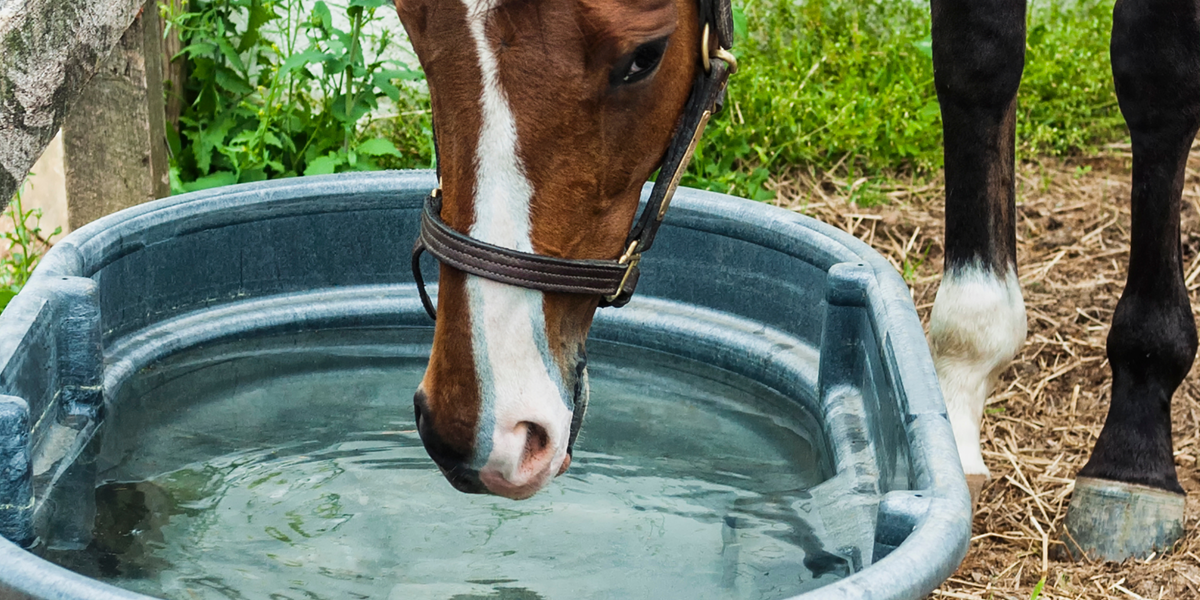
Ask any horse owner what the most important thing in the paddock is, and you'll hear plenty of answers: good fencing, good grass, good shelter. But the humble water trough deserves a place at the top of that list. Fresh, clean water is the foundation of your horse's health, and a trough that's slimy, green or stagnant can quietly undermine it.
In this guide, we'll explain why algae builds up in troughs, why it matters for your horse, and the practical routines (including trough blocks) that make keeping water clean far easier than you might think.
Why clean water is so important
A horse can drink around 20 to 40 litres (roughly 5 to 10 gallons) of water a day, and often more in hot weather, during hard work or when lactating. Water supports digestion, keeps gut contents moving and helps regulate body temperature. When a horse doesn't drink enough, the risks add up quickly, including dehydration and an increased chance of digestive problems such as impaction colic.
Here's the catch: horses are fussy drinkers. If a trough smells off, tastes odd or looks murky, many will drink less than they should, or avoid it altogether. That's why a dirty trough isn't just an aesthetic problem. It can reduce water intake without you ever noticing, especially in a large paddock where you can't see every drink.
What causes algae in horse troughs?
Algae are simple, plant-like organisms that thrive wherever there's water, light and warmth. A trough in a sunny paddock is almost the perfect environment, and it doesn't take much to get things started.
The main culprits are:
- Sunlight. Algae use light to grow, so troughs in full sun green up faster than those in shade.
- Warm temperatures. Growth accelerates in spring and summer, and water that sits still in the heat is a prime breeding ground.
- Nutrients. Feed particles, saliva, dust, leaves and droppings blown into the water all feed algae and bacteria.
- Still water. A trough that isn't topped up or refreshed regularly is more likely to develop a slimy film.
- Rough or scratched surfaces. Algae and biofilm cling to scratches and pitted plastic or concrete, making them harder to remove.
You may notice a slippery green coating on the sides, floating strands, or a thin film across the surface. Even when you can't see much, a slimy feel on the inside walls is a sign that biofilm is building up.
Is algae dangerous for horses?
Most of the green growth you'll find in a trough is common green algae, which is generally unpleasant rather than a serious hazard on its own. The bigger issue is what it signals: stagnant, nutrient-rich water where bacteria can also flourish, and where horses may be put off drinking.
There is a more serious category to be aware of. Blue-green algae (cyanobacteria) can produce toxins that are harmful to animals, and they tend to appear in warm, still, nutrient-rich water. They're most often associated with dams, ponds and slow-moving water, but it's sensible to take any unusual scum, a blue-green or paint-like surface film, or a strong musty smell seriously. You can't reliably tell the difference by eye, so if you're concerned, stop your horse accessing the water and speak to your vet.
Beyond algae, a neglected trough can also harbour:
- Bacteria that thrive in warm, dirty water
- Mosquito larvae in standing water, particularly in summer
- Drowned insects, birds or small animals that contaminate the supply
- Feed residue that ferments and sours the water
Signs your horse might be avoiding the trough
Your horse can't tell you the water tastes off, but their behaviour often can. Watch for:
- Drinking noticeably less than usual
- Sniffing or pawing at the water without drinking
- Waiting by the trough, then walking away
- Drier droppings or reduced gut sounds
- Skin that's slower than normal to return when pinched, or a dull, tired appearance
If you notice any signs of dehydration or colic, such as restlessness, pawing, looking at the flanks or rolling, contact your vet straight away.
Handy tips for keeping troughs clean
The good news is that you don't need an elaborate routine. A few consistent habits will keep most troughs fresh.
Scrub regularly
Aim to empty, scrub and rinse your troughs on a regular schedule. Weekly is a good guide in warm weather, and every couple of weeks may be enough in cooler months, depending on how quickly they get grubby. Use a stiff brush or scrubbing pad to loosen the slimy biofilm from the sides and base, then rinse thoroughly until the water runs clear.
If you use a cleaning product, make sure it's safe for animals and rinse the trough very well before refilling. Strong household chemicals are best avoided or used with great care, because any residue can put your horse off drinking or cause harm.
Use a trough block
Trough blocks (sometimes sold as trough cleaning blocks or algae-inhibiting blocks) are a popular, low-effort way to slow algae growth between scrubs. You simply drop a block into the water and it works over time to help keep the trough fresher for longer.
A few things to keep in mind:
- Choose a product made for animal drinking troughs. Always check the label to confirm it's suitable for horses.
- Follow the instructions exactly. The right number of blocks for your trough size matters, and more isn't better.
- Treat them as a helper, not a replacement. Blocks reduce algae growth, but you'll still need to scrub and top up regularly.
- Watch your horse's reaction. If your horse avoids the trough after you introduce a block, take it out and talk to your vet or the manufacturer.
Position troughs in the shade
If you can, place troughs under a tree, shelter or shade cloth. Less sunlight means slower algae growth, and cooler water is more appealing to drink on a hot day. If shade isn't possible, a simple cover or lid over part of the trough can make a noticeable difference.
Keep water moving and topped up
Fresh water is less likely to stagnate. A float valve that tops up the trough automatically keeps levels consistent and introduces new water throughout the day. If you fill by hand, try to refresh the water daily instead of just topping it up, particularly in summer.
Choose the right trough size and material
Smooth, non-porous surfaces are easier to clean. Scratched or pitted troughs hold on to algae, so replace or repair damaged ones. A trough that's sized sensibly for the number of horses means water is used and replaced more often, rather than sitting unused.
Remove debris daily
A quick daily skim to lift out leaves, hay, feed and any floating debris takes less than a minute and stops organic matter from breaking down in the water. If you feed near the trough, consider moving the feed area a short distance away.
Check for hidden problems
Look underneath and around the trough for leaks, overflowing water and muddy patches. A constantly wet area becomes a boggy, bacteria-prone zone that's bad for hooves as well as water quality.
Don't forget winter
Algae is mainly a warm-weather issue, but troughs need attention all year round. In cold climates, ice can restrict water access, so break it up daily and consider insulated or heated options. In wetter seasons, leaf litter and muddy run-off can foul the water, so keep an eye on cleanliness even when the sun isn't shining.
Using a paddock cam to check water from a distance
Even the best routine can't stop a trough running dry, springing a leak or getting knocked over when you're not there. This is where a horse camera earns its place.
The Equine Eye Vision is a portable 4G horse camera that works in the paddock without wifi or mains power, with an optional solar panel for continuous charging. Pointed at the trough, this horse cam lets you check from your phone whether the water level looks right, whether your horse is visiting regularly, and whether anything has changed since your last visit. If you've introduced a new trough block or changed your routine, you can see for yourself how your horse responds.
The same camera moves easily between locations, so it can work as a paddock cam in summer and a stable cam or barn cam when your horse is rugged and yarded for winter. Browse our range of paddock and stable cameras to find the right fit for your set-up, or explore the full camera lineup.
A simple weekly routine to follow
If you'd like an easy plan to stick to, try this:
- Daily: Skim out debris, check the water level and make sure the float valve and surrounds are working.
- Every few days: Refresh the water, especially in hot weather.
- Weekly: Empty, scrub and rinse the trough, then refill with fresh water.
- Ongoing: Use a suitable trough block as directed, and keep troughs in the shade where possible.
- Anytime: Act promptly if you see unusual scum, a strong smell or a change in your horse's drinking habits.
Frequently asked questions
How often should you clean a horse water trough?
Weekly is a good guide in warm weather, and every one to two weeks in cooler months. Skim out debris daily and refresh the water more often in hot conditions.
Are trough blocks safe for horses?
Trough blocks made for animal drinking troughs are generally safe when used exactly as directed. Always check the label, use the right number for your trough size and watch that your horse keeps drinking normally.
Can I monitor my horse's water trough remotely?
Yes. A 4G horse camera mounted near the trough lets you check water levels and drinking habits live from your phone, without needing wifi or power in the paddock.
Small habits, big difference
Clean water is one of the simplest and most effective ways to support your horse's health, and a few minutes of regular maintenance goes a long way. A scrubbed trough, a suitable trough block, a little shade and the occasional check-in will keep the water fresh and your horse drinking well.
To learn more about how we help horse owners keep a closer eye on their horses, visit equineeye.com, or read about why we built Equine Eye.
Share:
Barefoot vs shoes: what's really best for your horse's feet