

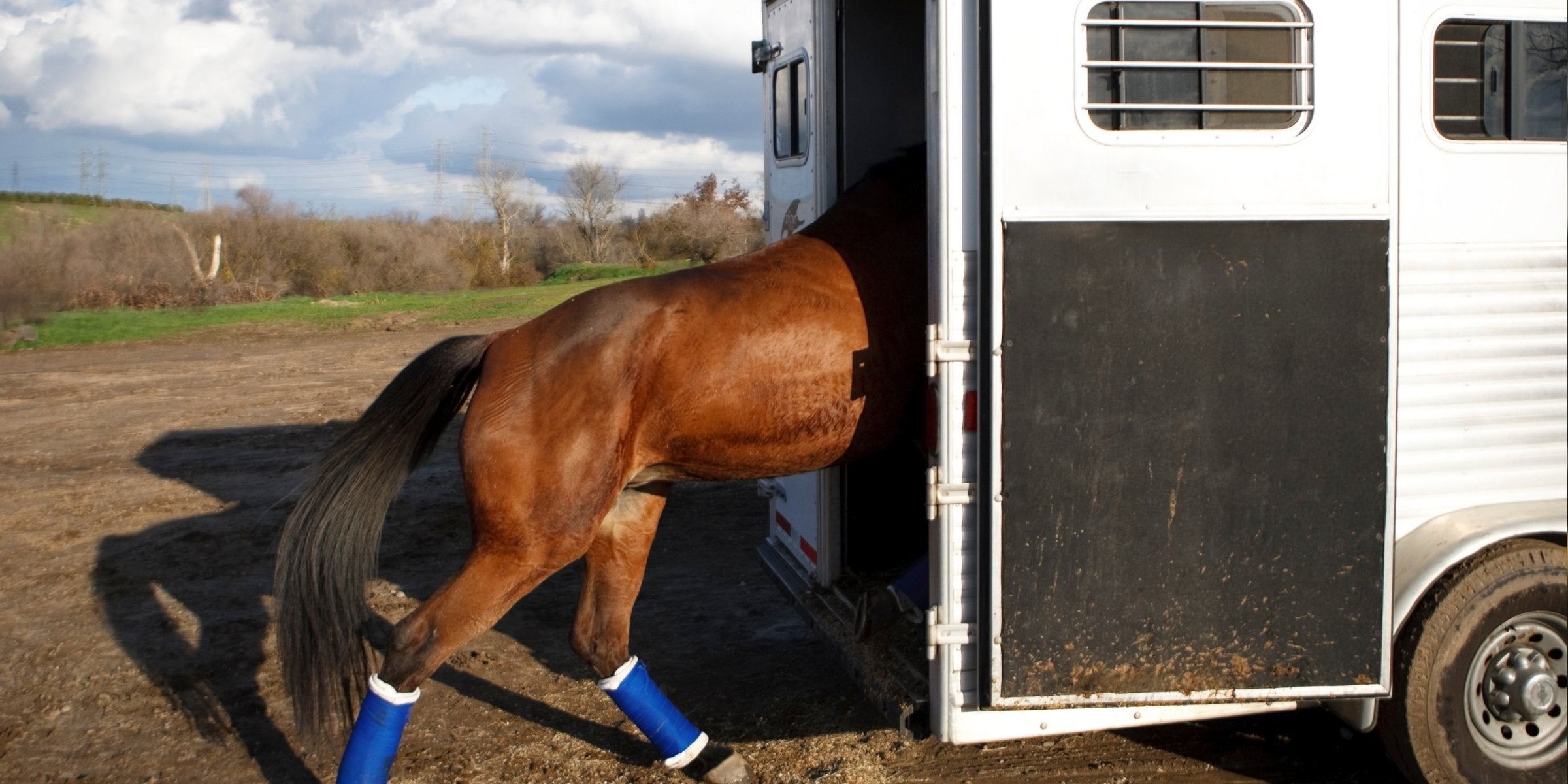
The first time many horse owners transport a horse on their own, they quickly realise that loading isn't simply about getting the horse into the float. Questions soon follow. Should a single horse stand on the left or the right? If travelling with two horses, should the heavier horse be loaded first? Does the answer change in an angle load trailer?
The truth is that horse position can affect how comfortably your horse travels and how stable your trailer feels while towing. Every horse is different, and every float is designed slightly differently, but understanding weight distribution can help you make safer decisions.
One thing previous generations of horse owners never had was the ability to actually see how their horse was travelling while they were on the road. Today, dedicated horse trailer cameras such as the Equine Eye Venture allow you to monitor your horse live throughout the journey, helping you identify scrambling, leaning or signs of stress that may indicate a different loading position would be more comfortable.
You can learn more about the Equine Eye Venture horse trailer camera here:
https://equineeye.com/products/equine-eye-venture
Why where your horse stands matters
Many people think once the divider is closed the horse simply stands there for the duration of the trip.
In reality, horses are constantly balancing.
Every time you:
- brake
- accelerate
- corner
- change lanes
- travel over uneven roads
- encounter crosswinds
your horse shifts its weight to stay upright.
Unlike a fixed load, a horse is a moving passenger. That movement changes the centre of gravity of the entire float or trailer.
Correct weight distribution improves:
- towing stability
- trailer balance
- horse comfort
- driver confidence
- tyre wear
- braking performance.
Straight load floats
Straight load floats remain one of the most common horse trailers in Australia.
With horses facing forwards, owners usually ask one question.
If travelling with one horse, which side should they stand on?
For Australia, where we drive on the left-hand side of the road, many experienced transport operators recommend loading a single horse on the driver's side (right side of the float).
This recommendation exists because Australian roads are built with a slight crown to allow water drainage, meaning the road naturally slopes towards the left shoulder.
Placing the horse on the right can help counteract that slope.
However, this isn't a universal rule.
Different manufacturers design floats differently, with varying suspension layouts, tack storage and axle positions.
Always follow your float manufacturer's recommendations first.
Travelling with two horses
When travelling two horses, owners often wonder where the heavier horse should stand.
Again, many transport professionals recommend placing the heavier horse on the driver's side.
However, the difference in horse weights also matters.
If one horse weighs 650 kg while the other weighs 450 kg, balancing tack lockers and feed storage becomes just as important.
Remember that two saddles, several hay nets, water containers and equipment boxes can add well over 100 kg to your trailer.
Angle load trailers
Angle load trailers distribute weight differently because horses stand diagonally.
Generally speaking, manufacturers recommend placing:
- the first horse in the bay closest to the axle
- heavier horses nearer the axle
- remaining horses to balance weight evenly throughout the trailer.
Again, every trailer is different.
Some three-horse floats differ substantially from four- or five-horse trailers, so always refer to your owner's manual.
Watching how your horse actually travels
This is where modern technology has completely changed horse transport.
For decades, owners guessed.
You loaded your horse.
You drove.
You hoped they travelled well.
Now you can actually see.
The Equine Eye Venture has been purpose-built specifically as a horse float and horse trailer camera, allowing you to watch your horse live throughout the journey on its dedicated HD monitor.
Rather than wondering whether your horse is comfortable, you can observe how they balance while the float is moving.
You may notice your horse:
- leaning heavily into one divider
- scrambling under brakes
- widening their stance
- continually repositioning themselves
- standing quietly and comfortably.
Those observations can help you decide whether changing partitions, travelling companions or loading positions may improve comfort on future trips.
Learn more about the Equine Eye Venture here:
https://equineeye.com/products/equine-eye-venture
What your horse's behaviour might be telling you
Every horse travels differently.
Some hardly move.
Others constantly adjust.
A dedicated horse transport camera lets you identify behaviours such as:
Scrambling
Often indicates difficulty maintaining balance.
Leaning
May suggest the horse is compensating for road camber or trailer movement.
Constant repositioning
Sometimes indicates fatigue, discomfort or insufficient space.
Excessive sweating
Can be associated with travel stress or poor ventilation.
Wide stance
Many horses naturally widen their stance to improve stability, but excessive bracing may suggest they are finding the journey difficult.
None of these automatically indicate a problem, but recognising patterns can help improve future journeys.
Why the Venture is different
Unlike general-purpose cameras, the Equine Eye Venture has been designed specifically for horse trailers.
Features include:
- dedicated HD monitor
- long-range wireless connection
- no reliance on mobile coverage
- excellent performance in larger floats and goosenecks
- clear daytime and night vision
- simple installation.
Because the Venture is purpose-built for towing horses, it provides continuous visibility throughout the journey without relying on mobile data or Wi-Fi.
For owners regularly travelling to competitions, clinics or long-distance events, it offers peace of mind that wasn't previously possible.
After you've arrived
Your horse's journey doesn't necessarily end once the trailer stops.
Many owners continue monitoring their horse after arrival.
This is where the Equine Eye Vision becomes the perfect companion.
Because the Vision is a portable 4G camera, it can move from the float to:
- the stable
- overnight yards
- paddocks
- recovery boxes
allowing owners to continue checking their horse remotely throughout competitions or overnight stays.
Learn more about the Vision here:
https://equineeye.com/products/vision
A compact alternative
For owners wanting a simple app-based horse trailer camera, the Equine Eye Voyager remains an excellent option for standard horse floats.
It provides live trailer monitoring directly to your smartphone while travelling and is ideal for owners wanting an affordable, compact transport camera.
More information is available here:
https://equineeye.com/products/voyager
Other ways to improve horse transport safety
Regardless of where your horse stands, remember to:
- service your float regularly
- check tyre pressures before every trip
- secure partitions correctly
- distribute tack evenly
- ensure adequate ventilation
- drive smoothly
- brake progressively
- corner steadily
- inspect flooring regularly.
Good towing habits often have just as much influence on your horse's comfort as their position within the trailer.
Final thoughts
There is no single loading position that suits every horse, every float or every journey. In general, many Australian horse owners load a single horse on the driver's side of a straight load float and place heavier horses closest to the axle or according to the trailer manufacturer's recommendations. For angle load trailers, evenly distributing weight remains the priority.
The biggest difference today is that you no longer have to guess how your horse is travelling.
The Equine Eye Venture allows you to watch your horse throughout the journey, making it easier to identify scrambling, leaning, stress or discomfort and helping you make informed decisions about loading positions, float setup and driving style.
For transport, it has become one of the most valuable safety tools a horse owner can have.
And once you've arrived, the Equine Eye Vision can continue monitoring your horse remotely in the stable or paddock, while the Voyager offers a compact trailer camera solution for everyday travel.
Together, the Equine Eye range helps keep your horse in sight from the moment you load them until you arrive home again.
Share:
Gastric ulcers in horses: causes, symptoms, treatment and how surveillance can help
Decoding horse camera lingo: A simple glossary for horse owners